Spectrum TV
- 2.9
- Rating
- 100.00K
- Installs
- Free
- Price

 Analysis by App-foxy
I found Spectrum TV most useful when I treated it as a shared-screen television app rather than a complete replacement for every way a household watches video. Its purpose is straightforward: it brings live television and On Demand viewing to an Android TV device, giving people in the home another way to use their Spectrum service from the main screen. That sounds simple, but the practical value depends heavily on who is using the television, whose account is involved, and how much coordination the household already has.
In my experience, the app makes the most sense for a living room, bedroom television, or another Android TV setup where people want to watch without moving a cable box or relying on a phone. I would recommend it to an existing Charter/Spectrum customer who wants a familiar television-oriented interface on Android TV. I would be more cautious about recommending it to someone looking for a broad, provider-neutral streaming service, because this is tied to the Spectrum viewing experience rather than being a general entertainment hub.
How Spectrum TV works in a shared household
When I think about Spectrum TV in a shared home, the key question is less about who can reach the remote and more about who is responsible for the account and the viewing choice. I’d agree on those basics before guests or children use the television, then consider how a simple household routine can make the shared screen easier to hand off.
You May Also Like

 Blood Strike: 2.5 Anniversary
Blood Strike’s Loadouts Turn Every Drop Into a Tactical Gamble
A close look at Blood Strike’s custom loadouts: how fast access to signature weapons reshapes its battle royale rhythm, rewards preparation, and narrows the gap between fights.

 Pandora - Music & Podcasts
Pandora’s Music Is Easy to Start, but Harder to Recover
Pandora’s strength is its low-effort path from a seed to a station. Its weak spot is how much confidence it asks you to place in connection, setup, and quiet recovery.

 8 Ball Pool
 Is Built on Rivalries, Rematches, and Routine
A close look at the rivalries, rematches, shared routines, and unanswered safety questions that turn a quick pool match into a persistent mobile community.

 Samsung Music
’s Quiet Strength Is Playing What You Already Own
Its reach comes less from spectacle than from dependable access to a personal library. That simplicity is both the app’s strongest retention engine and its ceiling.

 AccuWeather: Weather Radar
AccuWeather Review: A Quick, Clear Forecast for Everyday Decisions
For everyday plans, the best forecast is the one you can understand quickly. AccuWeather makes rain timing, radar, and local conditions easy to act on, with a few trade-offs.

 Hill Climb Racing
Why Hill Climb Racing Still Turns Crashes Into One More Run
A tiny car, a bumpy hill and one more upgrade: Hill Climb Racing keeps resurfacing because its simple chaos makes every near-miss feel personal.
More From Our News Desk
View All News


A realistic evening use case
Imagine a household with one Android TV in the living room. One person wants live television while preparing dinner, another wants an On Demand program later, and someone else is deciding whether to use the same screen afterward. In that situation, the app can reduce the need to pass a phone around or connect a separate device. The television remains the central point, and the household can use the app when it is their turn to watch.
The important word is “shared.” I would not think of this as a private mobile app that happens to appear on a larger display. On Android TV, the remote, the screen, and the account context are all visible to whoever is in the room. That makes the app convenient for communal viewing, but it also means that household members need a basic agreement about when the television is available and what content is appropriate for the people present.
For a couple, roommates, or a family that already watches together, this arrangement is fairly natural. The app’s entertainment category is reflected in that living-room role: it is designed around choosing something to watch, not around managing a personal media library or replacing every streaming subscription in the home.
Live viewing and On Demand serve different habits
Live television is the stronger use case when I want to turn on the screen and browse what is currently available. It suits shared moments where nobody wants to negotiate a long list of separate services. On Demand is more useful when the household has a specific program in mind and does not want to wait for a scheduled broadcast.
Those two modes also create different kinds of coordination. Live viewing is often spontaneous: someone opens the app and starts browsing. On Demand is more deliberate, especially when several people are choosing together. I found that deciding who is watching and what kind of viewing is planned matters more than the app itself. A shared television app can make access easier, but it cannot solve disagreements over the remote or the evening schedule.
One practical tip is to decide whether the television is being used for group viewing before opening the app. That small step avoids a common frustration: one person begins browsing live channels while another assumes the screen is available for a saved or requested program. The app works best when the household treats it as a common doorway to television, not as a silent personal queue.
Where it fits beside other entertainment options
Compared with a general streaming platform, Spectrum TV is more closely connected to the traditional television experience. A broad streaming service may be better for households that mainly search for individual shows across several catalogs. A provider-specific television app is more appealing when live programming and On Demand access are already part of the household’s routine.
I also see a difference between this app and using a phone or tablet for viewing. A mobile screen is personal and easy to carry, but it is less suitable when several people want to watch together. Android TV puts the content on the shared display and makes the remote the main control. That is a genuine advantage for communal use, although it also removes some of the privacy that comes with a personal device.
The trade-off is clear: if your priority is a large-screen Spectrum experience on Android TV, the app has a focused purpose. If your priority is combining many unrelated providers into one neutral interface, another solution may feel more convenient. I would not install it expecting it to organize every entertainment service in the house.
What the installation tells me about its audience
The app is free to install, which lowers the barrier for a household that already wants to try it on a compatible Android TV setup. Its content rating is Everyone, so its presentation is intended for a broad audience. That does not mean every program available through a television service is automatically suitable for every child or every shared viewing situation; it simply describes the app’s general age context.
The current release is version 21.1.0, and the minimum operating-system requirement is Android 10. Before planning a household setup, I would check the Android TV device’s software level rather than assuming that every older television or streaming box will qualify. This is especially important in a shared home, where one television may be newer than another and expectations can differ from room to room.
The app has reached over fifty thousand installs, with an average rating of 2.5 from around eighty ratings and forty reviews. I take that mixed reception seriously. It does not automatically tell me that the app will fail on a particular television, but it does suggest that the experience may not be equally smooth for everyone. I would approach the installation as a practical test on the intended screen, not as a guarantee that the app will behave identically across every Android TV device.
Setup boundaries matter more than people expect
The first boundary is the television itself. The app is specifically for Android TV, so the experience should be evaluated on the device where it will actually be used. Installing an app on a phone and assuming the same controls or layout will translate perfectly to a television is not a reliable way to judge it. The remote-driven environment changes how browsing, selection, and navigation feel.
The second boundary is the account. In a shared home, people may use the same television while having different expectations about who is authorized to start viewing or change what is on screen. I would clarify the account arrangement before handing the remote to children, guests, or roommates. A simple household rule—such as reserving account changes for one adult—can prevent accidental confusion without pretending that the app is a full household-management system.
The third boundary is the service relationship. Because the developer is Charter/Spectrum, I see this as an app intended to work within that provider’s ecosystem. I would choose it when the household already has a reason to use Spectrum television content. Someone without that connection should not select it merely because the installation itself is free; the price of an app download and the broader cost or eligibility of a television service are separate questions.
That distinction is easy to miss. “Free” is helpful when deciding whether to test the app, but it should not be interpreted as unlimited access to all television content without the appropriate service context. For a household, this is a useful budgeting reminder: first decide whether the provider relationship fits the home, then decide whether the Android TV app is a convenient way to use it.
Coordinating the remote and the room
Shared-device use exposes small friction points that are invisible when one person uses an app alone. The remote may be left in another room, the television may open on the last-used screen, or one person may begin browsing while another is still deciding what to watch. None of these issues is dramatic, but they shape whether the app feels pleasant in daily use.
I recommend keeping the Android TV remote in a known place and agreeing on who is choosing when several people are present. That sounds obvious, yet it has a direct effect on provider-based television apps because the main interaction happens on the communal screen. A household that already has a routine for choosing live television will probably adapt quickly. A household with several competing viewers may find that the social process is harder than the navigation.
Another useful habit is to separate browsing from watching. If someone is only checking what is available, say so before opening the app. If the group has already selected a program, avoid continuing to browse unless everyone agrees. This keeps the experience closer to a shared television session and prevents the app from becoming another source of background disagreement.
Guests create a slightly different situation. I would be comfortable using the app with guests when the account holder is present and the viewing choice is communal. I would be less comfortable leaving the television and account entirely unsupervised, particularly if the household has a clear boundary around who may use its services. The app’s broad age rating does not remove the need for ordinary trust and supervision.
Age context and trust in the home
The Everyone rating makes Spectrum TV approachable for a household with mixed ages, but I would not use that label as a substitute for parental judgment. Live television and On Demand catalogs can contain different kinds of programming, and the right choice depends on the child, the content, and the situation. Parents should remain involved when younger viewers are choosing what to watch.
This is also where shared-device boundaries become important. If children can use the Android TV independently, I would establish clear rules about when they may open the app and whether an adult must approve the program. If teenagers or roommates share the screen, the issue may be less about age and more about respecting the account holder’s arrangements. The app can support common viewing, but trust still comes from the people using it.
I would also explain to younger users that the television app is not the same as a personal profile on a phone. What appears on the screen is visible to everyone nearby, and a selection can immediately change the shared viewing session. That simple explanation helps children understand why they should ask before taking over the remote, even when the app itself is easy to open.
For adults, the same principle applies in a different way. A roommate may be allowed to watch television but not to alter the household’s broader account arrangements. A guest may be welcome to choose a program but not to use the service without the owner present. These are not technical features; they are practical boundaries that make a provider-connected app safer and less awkward in a shared environment.
Small workflow choices that improve daily use
My first workflow suggestion is to test the app during a low-pressure viewing period rather than during a major household event. If navigation feels unfamiliar or the television needs attention, discovering that before everyone gathers is much less frustrating. This is particularly sensible given the app’s modest average rating and the fact that Android TV hardware can vary from one home to another.
My second suggestion is to choose one primary television for the app before installing it across several screens. A household can learn how the interface fits its routine on one shared device, then decide whether another room would genuinely benefit. This avoids creating several new points of coordination when the living-room television is the only screen people actually use together.
My third suggestion is to make the account holder the person who handles setup and troubleshooting. In a family or shared apartment, that keeps responsibility clear. Other household members can learn normal viewing, while the person responsible for the service decides how the app should be used and whether it remains installed. This is a better arrangement than letting every user make independent changes simply because they can reach the remote.
A fourth insight is that the app’s value rises when the household wants television continuity between rooms, but only if those rooms use compatible Android TV equipment and the same service expectations. If one screen is used for group viewing and another is used privately, the household should decide whether the second installation adds convenience or merely creates another place where people may compete for access.
Who should choose it, and who should skip it?
I would choose Spectrum TV for an existing Spectrum household that wants live television and On Demand content on an Android TV screen, especially when the main use is shared viewing. It is a sensible fit for people who prefer a television interface to watching on a mobile device and who do not want to move between several physical devices during the evening.
I would also consider it for a household where one person manages the service but several people watch together. The app’s free installation makes testing straightforward, and the Everyone rating suits a broad household audience at the app level. The key is to keep account responsibility with the appropriate adult or account holder and to agree on how the shared television is used.
I would skip it if I wanted a provider-independent catalog that combines unrelated streaming subscriptions. I would also hesitate if the intended Android TV device does not meet the Android 10 minimum, or if the household expects every viewer to have a separate, private experience. In those cases, a mobile-first service, a general streaming platform, or another television arrangement may fit better.
I would not make the decision from the rating alone, but I would use it as a reason to test carefully. An average of 2.5 indicates that the app has not satisfied every user, so I would pay attention to how it behaves on the specific Android TV device in the home. If the household needs a dependable setup for a planned event, I would test it beforehand rather than installing it moments before viewing begins.
My household verdict
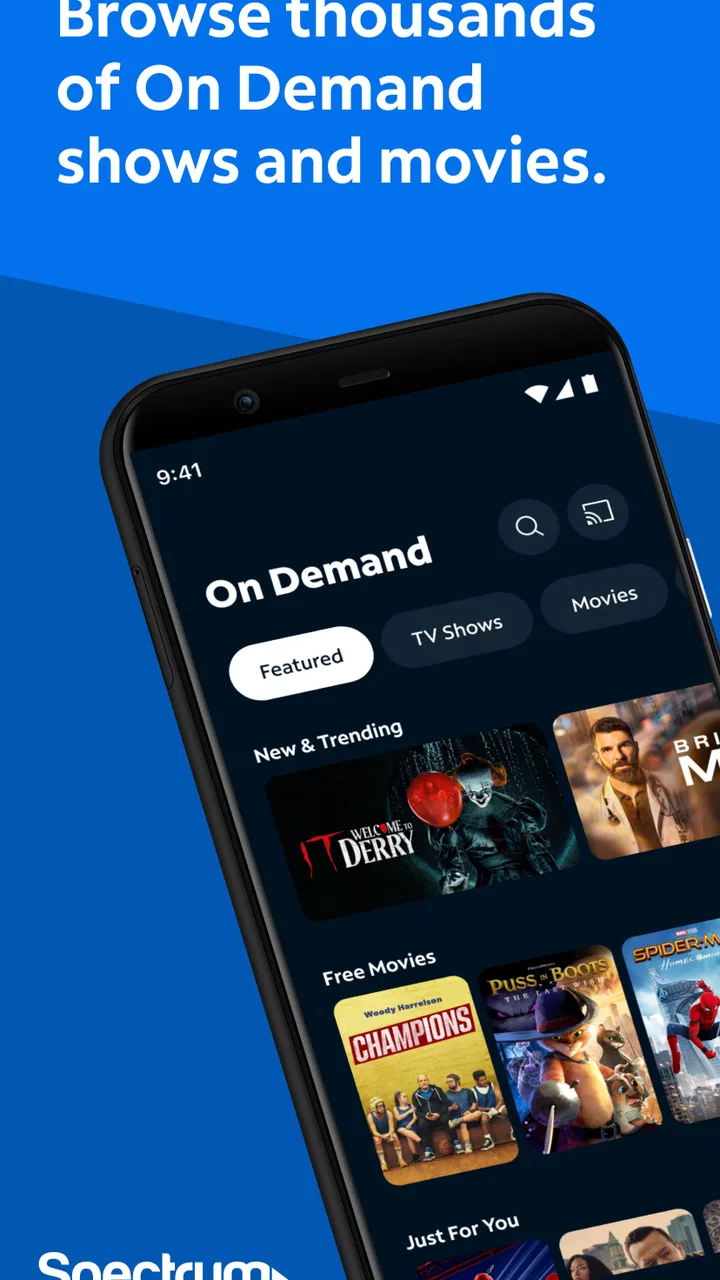
Spectrum TV is a focused entertainment app with a clear role: bringing Spectrum live television and On Demand viewing to Android TV. I like its potential as a shared-screen option because it places the experience where households naturally gather, rather than forcing everyone to use a small personal device. The best results come when the account holder, the television, and the viewing routine are all clearly understood.
My reservations are equally practical. The app is not a neutral replacement for every streaming service, and its mixed rating means I would avoid making broad promises about reliability across all Android TV hardware. The Android 10 requirement also makes device checking part of the decision, not an afterthought. For a household with older equipment or complicated account expectations, those boundaries may matter more than the free installation.
Overall, I would recommend trying it when Spectrum is already part of the home’s television setup and the goal is simple, shared viewing on Android TV. I would keep the account boundaries clear, involve adults in age-appropriate decisions, and test the intended screen before relying on it. Used in that way, it can be a convenient common television doorway; used as a universal streaming solution, it is probably the wrong tool.
FAQs for Spectrum TV
01What is Spectrum TV, and how does it work?
Spectrum TV is a streaming app that allows users to watch live TV, on-demand content, and DVR recordings from their mobile devices. It works by using an internet connection to stream content, providing a similar experience to cable TV without the need for a physical cable box. Users need a Spectrum TV subscription to access its features.
02Do I need a Spectrum subscription to use the Spectrum TV app?
Yes, you need an active Spectrum TV subscription to access the app. The app is designed to complement your existing Spectrum service, allowing you to stream live channels, on-demand shows, and movies that you’ve subscribed to in your package. Without a subscription, the app's features are inaccessible.
03Can I use the Spectrum TV app on multiple devices?
Yes, the Spectrum TV app can be used on multiple devices, including smartphones, tablets, and smart TVs. However, the number of devices you can stream on simultaneously may be limited by your subscription plan. Check your plan details to know the specific limits on concurrent streaming.
04Is the Spectrum TV app available on all devices?
The Spectrum TV app is available on both Android and iOS devices, including smartphones and tablets. It can also be accessed on Apple TV, Roku, Xbox, and Samsung Smart TVs. However, availability might vary based on the device model, so it's best to check compatibility before downloading.
05Are there any additional costs for using the Spectrum TV app?
Using the Spectrum TV app itself does not incur additional costs beyond your regular Spectrum TV subscription. However, be aware that streaming content via the app will use internet data, which could lead to additional charges if you exceed your data plan's limit. Always monitor your data usage when streaming.
Pros
- Wide selection of live channels.
- User-friendly interface design.
- Supports multiple devices.
- On-demand content available.
- Parental controls included.
Cons
- Requires Spectrum subscription.
- Limited offline viewing options.
- Occasional streaming lags.
- Some content not in HD.
- Ads can be intrusive.

Spectrum TV
Gallery